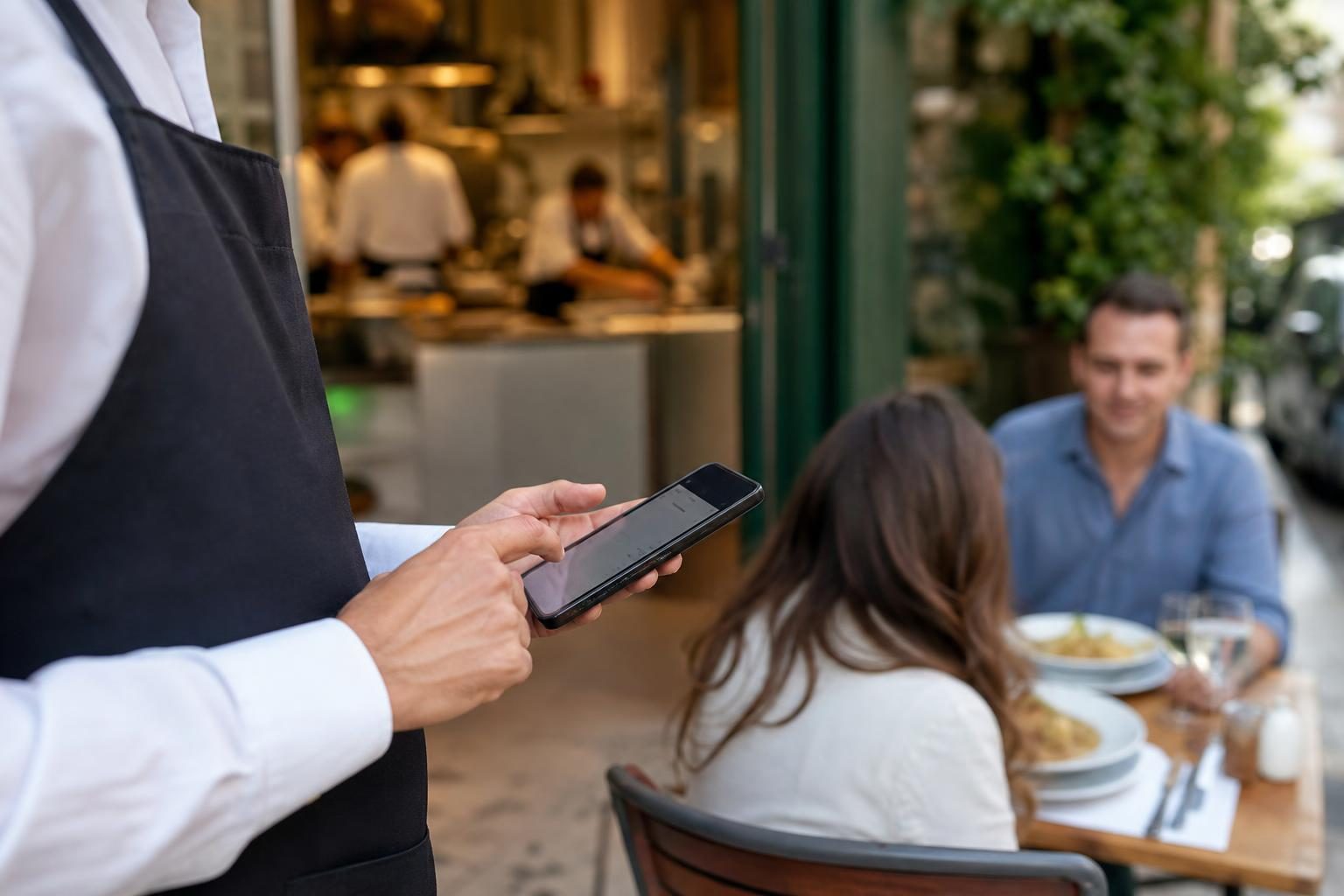
In the mobile app that BreakingPoint built for HORECA SMART GPH SRL, the waiter takes the order at the table and sends it from the phone straight to the kitchen or bar. No more entering the order at a shared terminal, and the kitchen can reply through the app when a dish is ready or when a product is no longer available. The app is used in over 350 restaurants working with the GPH system.
Why were orders delayed when they were taken on a notepad?
Orders were delayed because the waiter had to reach a shared terminal before the kitchen or bar received them. In many of the restaurants the GPH app was designed for, the waiter wrote the order on a notepad, went to a terminal and entered it into the system. In other cases, the order was entered directly at the marking screen in the kitchen, that is, the screen used for recording orders.
During peak hours, several waiters needed the same terminal and a queue formed. On the terrace, even without a queue, the trip to the till and back added to every order. The time between the conversation at the table and the start of preparation thus depended on where the terminal was, not just on how busy the kitchen was. When the order was written on paper, copying it into the system added another chance of error, right when the dining room was full.
How does the waiter send an order from the phone to the kitchen or bar?
The waiter selects the table in the GPH app, records the order and sends it directly to the section that prepares it, without going through the till. We built the app for Android phones and connected it to the GPH server on the restaurant's computer. The server is the component of the system that receives orders from the phones and immediately transmits them where they need to be prepared.
- The waiter logs in and sees the floor plan. They can zoom in on the plan to identify and select the table.
- They choose products from categories and menus or search for them by name. If a dish has options or special requirements, they add them to the product as part of the order.
- They send the order to the kitchen or bar, depending on where it is prepared. The order appears immediately on the Kitchen Display, the screen in the kitchen where the team sees the time elapsed since it was taken, and at the same time it is printed on the section's receipt printer.
The phone remains useful after the food has been served. The waiter can request the proforma bill from the app, that is, the bill presented to the customer before payment. Also from the phone, they can take payment or process a return, for which they enter the reason. The app thus covers operations that occur when closing a table, not just selecting products.
How does the app prevent duplicate orders at the same table?
When a waiter opens a table in the GPH app, the table is temporarily locked for the other waiters. The lock prevents two colleagues from entering an order for the same table at the same time. It is especially useful during shift changes and on the terrace, where two waiters might reach the same table without knowing that one of them has already started recording the order.
The lock does not stay active indefinitely. If the waiter leaves the table open on the phone without working on it, a timer releases it automatically. A colleague can then take over the table without waiting for the first waiter to return to the phone. The feature solves a specific problem: it prevents simultaneous work on the same table, without a phone left aside keeping the table locked indefinitely.
How does the waiter find out that a dish is ready or that a product has run out?
The cook can mark a dish as completed or send a message to the waiter handling the table, and the phone notifies them by vibration. For example, if a product runs out after the order was taken, the kitchen can write directly to the waiter. The waiter can go back to the customer to decide what to replace it with, without first making a trip to the kitchen just to find out what happened.
The phone receives the notification even if the app is not open. The component that receives notifications starts automatically even after the phone is restarted. In practice, communication goes both ways: the waiter sends the order, and the kitchen transmits what has been prepared or what needs to be changed. A typical reply, worded to illustrate the situation and not taken from a real person, would be: "I no longer run to the till for every table. I take the order at the table, send it, and when it's ready, my phone vibrates."
How was the mobile app developed for the existing GPH system?
BreakingPoint built the waiter app as an extension of the existing GPH system, without replacing the program on the restaurant's computer. HORECA SMART GPH SRL sells and implements this system for restaurants, bars and terraces in Romania, and our collaboration with the GPH team has lasted 22 years.
We wrote the app in Java, a programming language used for Android, and connected it to the GPH program on the computer, written in C#, another programming language. The phone took over the operations the waiter performs in the dining room, while the computer system remained the point through which orders flow. The app also includes an individual report for each waiter, automatic updates directly from the app and licensing, that is, managing the right of use.
This version runs in over 350 restaurants using GPH. The new generation is being developed in Flutter, a set of tools that allows building the app for Android and iPhone from the same code. The version currently used in restaurants is the one for Android.
How much faster does an order reach the kitchen?
We estimate that an order reaches the kitchen about one to two minutes earlier, especially during busy hours and on terraces. The estimate comes from the team's observations in partner restaurants. GPH has not made before-and-after measurements, and BreakingPoint has no official statistics for this result.
| What happens | With the shared terminal | With the GPH mobile app |
|---|---|---|
| Sending the order | The waiter goes to the terminal and enters it there. | The waiter sends it from the table. |
| Transcription | If they wrote it on a notepad, the waiter copies the order into the system. | The order is entered only once. |
| Working at the same table | Two colleagues can start taking the order without knowing about each other. | The table opened by one waiter is temporarily locked for the others. |
We also estimate that there are fewer wrong or duplicate orders, but we do not have a measured percentage. Differences may vary depending on the size of the dining room and how busy the service is. The estimate refers strictly to the time until the order reaches the kitchen, not to cooking time or how long the customer waits until receiving the food.
What should you check before investing in a mobile app for waiters?
Start by tracking a few orders during a busy shift, from the moment they are taken at the table until they appear in the kitchen or bar. Record separately the walking time to the terminal, the waiting time at the terminal and any corrections after transcription. If you have a terrace, also track the route from there: the distance to the till can change what is worth solving first.
If you test an app, repeat the observation during a comparable shift. Also check what happens when a colleague tries to open a table that has already been taken or when the kitchen needs to announce that a product is missing. Our recommendation is to judge the app by these situations, not by the number of features: the order should be entered only once, reach directly whoever prepares it, and the kitchen's reply should reach the waiter without shouting or extra trips.
Frequently asked questions
Is the GPH waiter app also available for iPhone?
The version currently used in restaurants is for Android. The new generation is being built in Flutter to work on both Android and iPhone.
Can the waiter request the bill and take payment from the phone?
Yes, the GPH app allows them to request the proforma bill and take payment from the phone. They can also process a return, for which they enter the reason in the app.
Can the waiter record special requirements for a dish?
Yes, the GPH app allows adding modifiers, that is, options or special requirements associated with a product. The waiter records them together with the dish before sending the order.
Does the app need to stay open for the waiter to receive messages?
No. The phone receives the notification and vibrates even if the GPH app is not open. The component that receives notifications starts automatically after the phone is restarted.